HIGH-GRADE ANODISING
A finish for generations
Low-carbon aluminium is a great start. But sustainability goes further.
ARCHITECTURAL ANODISING
Aluminium is well known as an exceptional building material — lightweight, strong, durable and infinitely recyclable.
Advances in low-carbon aluminium production are helping reduce the environmental impact of our built environment.
Equally important is how aluminium is finished to protect its appearance and performance over time.
Anodising and powder coating are both outstanding and established architectural finishes, but use fundamentally different technologies, offering different characteristics and long-term outcomes.
AAF Queensland has established a research centre to document and share current information, technical research and real-world performance evidence to assist architects and specifiers in making informed decisions for sustainable buildings.
AAF Queensland Anodising is also committed to ensuring high-grade architectural anodising remains an available finishing option, supported by technical guidance from initial specification through to installation.
Further reading: Low-Carbon Aluminium Is a Great Start. Next: Aluminium’s Journey to Further Optimise Sustainability.
ANODISING AND POWDER COATING
Different technologies. Distinctive finishes.
Powder coating applies a separate protective film in a wide choice of colours. Anodising transforms the aluminium surface into an integral protective layer that preserves its metallic character. Both offer excellent benefits; the right finish depends on the project.
Not just a coating. A transformation.
Part of the metal
Anodising transforms the aluminium surface into a hard oxide layer that is part of the metal, so the finish cannot flake, peel or blister.
Documented 70+ years’ performance
At Oxford’s New Bodleian Library, the original 1940 anodised window frames were cleaned, reglazed and returned to service in the 2015 refurbishment.
Built for Queensland’s extremes
Intense sunlight, tropical humidity and coastal salt make Queensland one of the world’s most demanding environments for architectural finishes. Correctly specified and sealed, anodising provides excellent corrosion resistance, with exceptional performance demonstrated in Australia’s saltwater marine environments.
A true metallic finish
“True Metal” colouring keeps the natural metallic lustre of aluminium and delivers extreme UV resistance.
Harder wearing
AAF controls its anodising treatment to achieve hardness and durability that exceed the AAMA 611 and AS 1231 performance standards.
Lower CO2 than powder coating
Anodising eliminates almost all petrochemical process emissions, and because it is an all-electric process, its footprint falls further as electricity grids decarbonise. Aluminium is 100% recyclable, and anodising adds zero cost or waste in recycling.
Finished locally to Australian standards
Finishing in Geebung means compliance with local standards that is easier to confirm, faster lead times and better communication. For projects in Queensland and the Northern Territory, it also lowers transport emissions and supports Australian manufacturing.
Quality you can document
Process certification and spectrophotometer colour measurement keep finish quality controlled and documented, because not all anodising is the same.
A service life well beyond 50 years
Correctly specified, high-grade architectural anodising is expected to outlast the 50-year service life long assumed in life cycle assessments. Warranty terms depend on the Australian Standards and building code requirements for each project.
New evidence.
A fresh look.
New research showing anodised aluminium components still serviceable and in near-original condition after more than 70 years highlights anodising’s long-term potential. Durability, surface hardness, saltwater resistance and fire performance should all be considered alongside initial environmental impacts.
Original components can remain serviceable for decades longer, preserving the aluminium and the energy already invested in making it. When a building is refurbished, sound anodised framing can be retained and returned to service.
Sustainability and service life
Aluminium has a significant embodied carbon footprint as a virgin material, and once extruded it presents a large surface area to finish, so the finish plays a significant role in its overall carbon footprint. An independent Environmental Product Declaration for North American aluminium extruders found that, compared with mill-finish aluminium, anodising adds 18% to CO2e emissions, while powder coating and paint add 43%.
Clearer information. Better specifications.
AAF Queensland makes high-grade architectural anodising accessible, with selected architectural colours, defined finishing standards and practical specification support through to installation. We help architects, designers and specifiers understand their options and choose with confidence.
Learn the difference
See how anodising transforms the aluminium surface and why the finish you specify matters.
Choose your colour
Explore AAF Queensland’s primary architectural finishes and Evershield® process specifications, order samples, or ask about a made-to-order colour matched to your project.
Talk to our team
Get technical and specification support specific to your project.
Decades of experience behind every finish
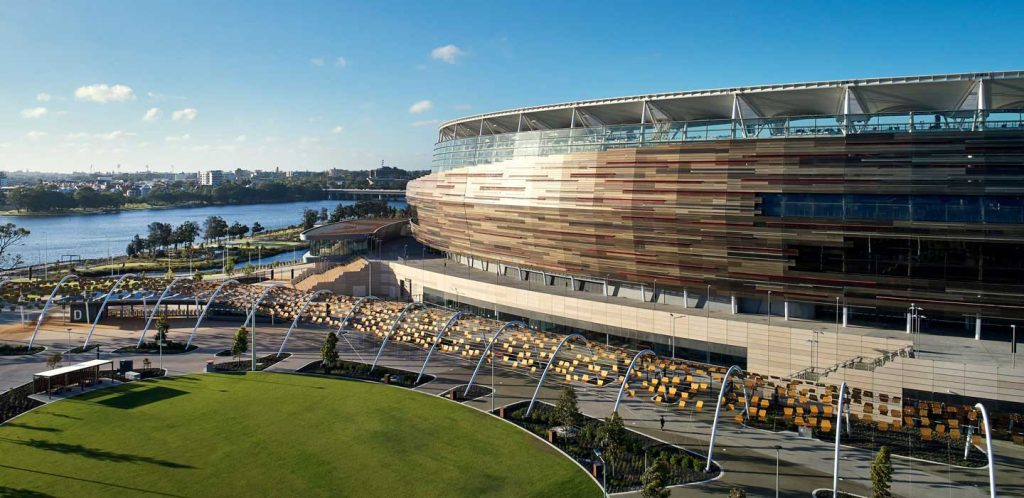
AAF has spent more than 40 years developing and refining its anodising process, and its Evershield® finishes can be seen on some of Australia’s best-known buildings, including the Sydney Cricket Ground. AAF Queensland is supported by experienced people and decades of specialist knowledge.